Visible water is only part of the damage. The cost of basement flood cleanup in Cherry Hill depends on the water source, how far moisture has spread, which materials need drying or removal, and whether repairs are needed. The full scope becomes clearer after water extraction and an assessment of affected areas.
A flooded basement is stressful, and it’s reasonable to want a clear picture of the work and expense before deciding what comes next. This guide explains what drives repair costs, what cleanup and emergency response involve, and how drying time can vary. Water damage restoration drying takes 3-7 days on average, while the condition of the materials and the extent of hidden moisture affect the work that follows.
Learn how the water source and contamination affect the response, why drying matters beyond the visible puddle, and how to document the damage. This practical overview follows the process from water removal through structural drying and repairs, helping you make informed decisions as the work proceeds.
Key Takeaways
- Repair costs depend on the water source, the area affected, and which building materials need removal or repair.
- Clear photos and video of the damage can help document the condition of the basement for an insurance claim.
- Moisture can travel behind walls and beneath floors, so drying needs to address hidden areas as well as visible water.
- Learn what to do first during a flood and how the cleanup process changes when water may be contaminated.
Need Water Removal or Flood Cleanup in Cherry Hill, NJ?
In Cherry Hill, heavy storms can overwhelm drainage, drive water through foundations, or trigger sewer backups. Prioritize safe access, water extraction, and identifying whether the water is contaminated.
Emergency Water Extraction
A 24/7 emergency extraction response focuses first on removing standing water and limiting further damage. Technicians assess the affected rooms, water source, and access conditions, then use extraction equipment suited to the volume and space. Industrial water extraction equipment can handle larger volumes than household wet vacuums, but the right setup depends on the basement and the water present.
When choosing a restoration company serving Cherry Hill, look for a process that covers extraction, cleanup, drying, and repairs, not water removal alone. Ask for a clear scope and a documented assessment of the damage.
Basement Water Removal and Restoration
Basement water extraction is only the removal stage, not the whole recovery. Cleanup may involve removing wet contents and debris, then addressing affected flooring, baseboards, drywall, and other materials. Water can travel behind walls or beneath floors, so technicians should assess beyond the visible puddle before restoration begins.
In Cherry Hill, permit requirements depend on the repairs involved. Water extraction and cleaning differ from reconstruction that changes building components. Determine which rules apply to the specific repair scope before reconstruction starts.
Flooded Basement Safety and Prevention
Don’t enter standing water if it’s near outlets, appliances, or wiring. Turn off power to affected rooms only if you can do so without entering the water; otherwise, keep out until the electrical hazard is addressed. Sewage backups and natural floodwater can be Category 3 water, which may contain pathogens.
In Cherry Hill, flooding can follow overwhelmed drainage, foundation seepage, or sewer backups during heavy storms. Check regularly for plumbing leaks and address them promptly. For basement flood cleanup, the water source and condition help determine the appropriate extraction and cleanup steps.
How many days does water damage restoration usually take?
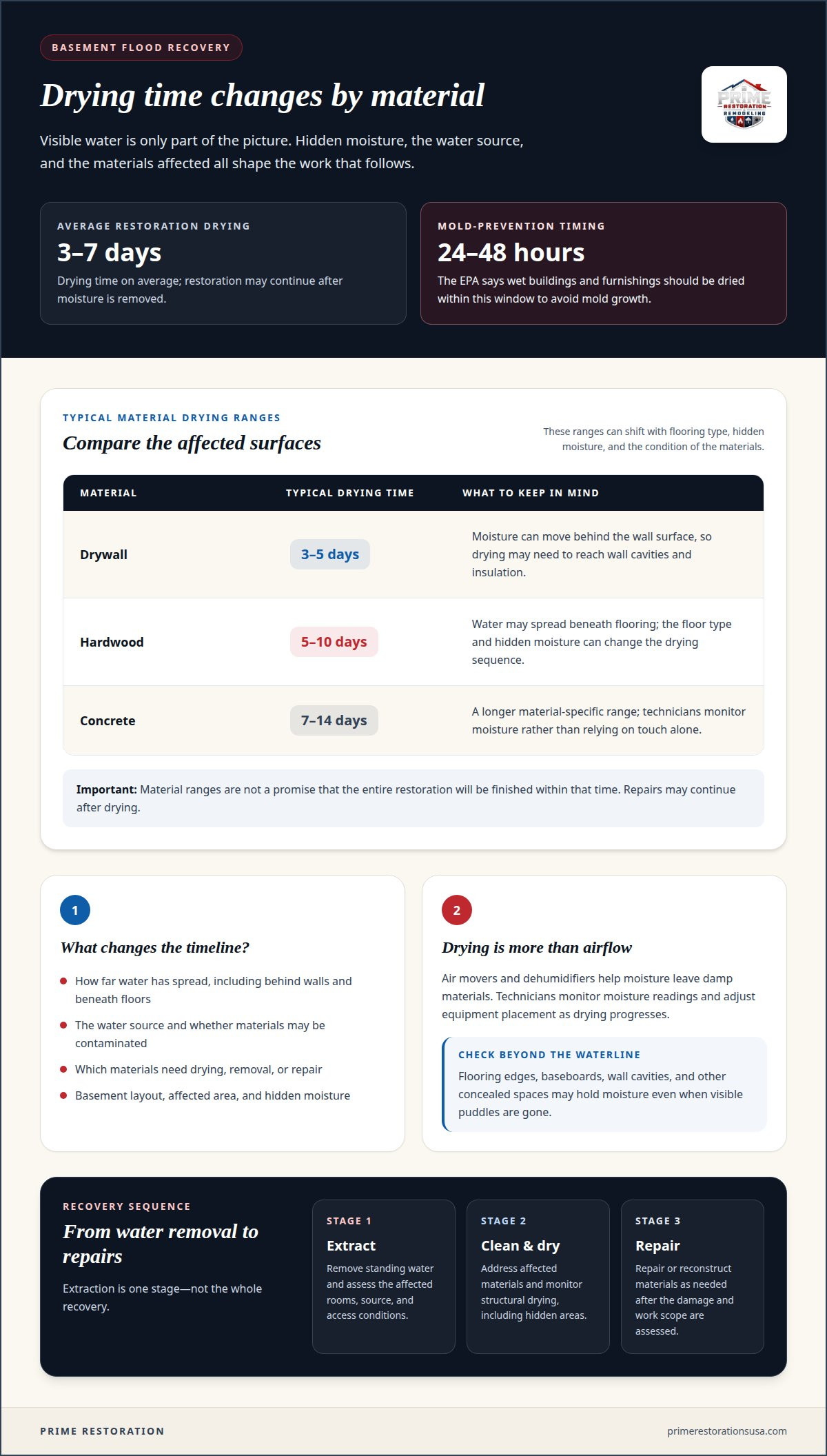
Drying takes 3-7 days on average, but restoration can continue after moisture is removed. The timeline depends on how far water spread, whether materials are contaminated, and what needs repair. Drywall typically dries in 3-5 days, hardwood in 5-10 days, and concrete in 7-14 days. Flooring type and hidden moisture can change the sequence of work.
Insurance documentation helps connect the visible damage to the cleanup and repair scope. Before cleanup begins, photograph and video affected rooms, damaged belongings, and visible water levels. Keep records of water removal, damaged materials, and restoration work. Clear, dated images can show the initial condition; later records can document what equipment and removal steps were used.
Keep your policy and claim details together. Review your insurance documents whenever you make a change, or at least annually. Groundwater flooding is usually covered by flood insurance rather than a standard homeowners policy, so identify the water source and refer to your policy when documenting the loss. Record sewage backups or contaminated water accurately rather than grouping them with clean-water damage.
- For a claim: Record the date, affected rooms, visible water level, and damaged belongings.
- For coordination: Save assessment notes, work records, and communications about the restoration scope.
- For payment: Direct billing is a payment arrangement, not a guarantee of insurance coverage. Confirm how the insurer and restoration provider will handle payment before work proceeds.
Insurance claims assistance can include organized damage records and a clear work scope, but coverage decisions remain tied to the policy and the documented loss. For help with the physical restoration, review water damage restoration options and keep the claim records with your project documents.
Swipe to view the full infographic
Structural drying and dehumidification
After extraction, drying must reach damp framing, flooring, and wall cavities, not just visible puddles. The aim is to remove trapped moisture before it causes further damage.
Structural Drying
Structural drying targets moisture-holding materials such as drywall, insulation, floorboards, and framing. Technicians position air movers and dehumidifiers to help moisture leave those materials, then monitor progress rather than relying on touch alone. A commercial dehumidifier can support drying across a larger affected area; the setup depends on the basement’s layout and materials. Water damage restoration also includes checking hidden spaces where water may have traveled.
The drying plan depends on the water source. A clean-water appliance leak can affect materials differently from a sewage backup, which may contaminate porous surfaces. An assessment identifies affected areas and materials before cleaning and drying proceed.
Prompt Drying for Mold Prevention
Time matters: according to the U.S. Environmental Protection Agency, wet buildings and furnishings should be dried within 24-48 hours to avoid mold growth. Prompt drying reduces the time moisture remains in materials, but it does not replace cleaning or removal when items are contaminated. Drying equipment should address damp areas beyond the waterline, including flooring edges and spaces behind baseboards.
Moisture can spread through wall cavities and insulation, so drying exposed surfaces alone may miss affected materials. Technicians use moisture readings to track progress and adjust equipment placement, helping identify structural materials that still need attention.
Basement Cleaning and Drying Steps
Cleaning and drying follow a clear sequence: remove standing water, clear damaged contents, clean affected surfaces, then dry the structure with appropriate equipment. The water source guides cleaning decisions. Sewage-affected materials need different handling from those exposed to a clean-water appliance leak. Technicians assess what can be cleaned and what needs removal.
Drying equipment then runs while technicians monitor moisture in walls, floors, and other affected structures. Restoration follows once cleanup and drying have addressed the damaged areas. This sequence connects water removal, cleaning, and structural drying instead of treating them as separate tasks.
Flood cleanup and emergency response
In Cherry Hill, heavy storms can overwhelm drainage, force seepage through foundations, or trigger sewer backups. Emergency response starts by identifying the water source and assessing the basement. That distinction guides safe water removal, cleanup, and structural drying.
If standing water is near outlets, appliances, or wiring, turn off power to affected rooms only from a safe location. Don’t walk through water to reach a breaker. Natural floodwater is Category 3 water, and sewage backups can also involve grossly unsanitary water. Keep people and pets out until hazards are assessed.
Water categories can change the response. Category 1 water left standing can become Category 2 within 24-72 hours. Category 2 or 3 water events require EPA-registered antimicrobial application. Extraction and cleaning should reflect the water’s source, not just its color or depth. Structural drying then targets damp materials beyond the visible waterline.
- Document the scene: Photograph and video affected rooms, damaged belongings, and visible water levels before cleanup begins.
- Limit further exposure: Keep people away from standing water and avoid moving items through contaminated areas.
- Control slow-moving water: Sandbags can help redirect floodwater up to two feet deep, but they don’t stop it completely.
The first 24 hours after water enters a home can determine whether damage stays limited or spreads into walls, floors, and insulation. Building materials may be permanently damaged when water damage isn’t professionally addressed within 48-72 hours. A prompt assessment helps set the cleanup and restoration sequence. For emergency restoration services, request emergency water damage help and describe the water source, affected rooms, and any electrical concerns.
Prime Restoration: Flood Damage Cleanup South Jersey
Prime Restoration provides water damage restoration in South Jersey and Camden County for homeowners facing basement flooding. Turn to the team when standing water, damaged materials, or moisture within the structure calls for professional restoration, not just water removal.
The recovery can address flood damage and the resulting water damage. If a separate fire or smoke event has also affected the property, Prime Restoration handles fire and smoke damage restoration. To define the work, share what happened, where the water reached, and whether the source was a storm, seepage, or backup.
For basement flood cleanup in Cherry Hill, contact Prime Restoration to discuss the damage and the restoration work needed.
Move from basement damage to a clear recovery plan
The next step is turning the damage into a practical restoration scope. Keep notes on the water source, affected rooms, damaged belongings, and repairs you are concerned about in one place. This gives the restoration discussion a clear starting point and keeps your priorities visible as work progresses.
For basement flood cleanup in Cherry Hill, Prime Restoration offers water damage restoration in South Jersey and Camden County, along with emergency water damage restoration. Share what happened and what the basement needs now. The team can discuss the restoration work that fits the damage, while you stay focused on protecting your home and planning what comes next.
Contact Prime Restoration for help and take the next step toward a more manageable recovery.
Frequently Asked Questions
How expensive is water damage repair?
Repair cost depends on the water source, affected area, materials, and whether structural repairs are needed. Clean water affecting one finished room can require different work from a sewage backup reaching several rooms. The price depends on the case and is provided after a quote request. The scope should account for water removal, cleanup, drying, damaged material removal, and reconstruction where needed.
How soon can mold appear after water damage?
Mold can begin growing in damp conditions within 24 to 48 hours after water intrusion. A small leak beneath a sink or behind stored boxes can leave moisture unseen, even when the floor looks dry. Promptly identify damp materials and address them; persistent musty odors, discoloration, or recurring dampness can signal areas that need closer assessment.
How to clean up flood damage in a home?
Keep people away from electrical hazards and contaminated water. Photograph damaged rooms and belongings, then arrange water removal and cleanup suited to the water source. For basement flood cleanup in Cherry Hill, the steps may differ for stormwater and a household leak. Separate items that can be cleaned from soaked or contaminated porous materials, and document what is removed.
How urgent is water damage cleanup?
Water damage cleanup is urgent because moisture can spread into materials that are hard to see or reach. A wet carpet edge, for example, may conceal moisture beneath flooring or along a baseboard. Stay clear of standing water near wiring and arrange an assessment promptly. In Cherry Hill, Marlton, Medford, Mount Laurel, Moorestown, and Voorhees, the water source and affected building materials shape the response.
Is flood damage covered by insurance?
Coverage depends on the cause of flooding and your policy terms. Groundwater flooding is usually covered by flood insurance rather than a standard homeowners policy. A sudden indoor leak and water entering from outside may be treated differently, so document the source, visible damage, and affected belongings. Review your policy and keep claim communications and restoration records together.
What are the most common causes of home floods?
Common causes include heavy storms overwhelming drainage, water seeping through a foundation, sewer backups, and plumbing leaks. In Cherry Hill, intense rain can expose multiple vulnerabilities, such as drainage overflow alongside foundation seepage. Check for leaks regularly and address them promptly. Keeping drains clear and watching for recurring damp spots can also help you spot trouble before another flood affects the basement.