Water damage doesn’t stop at the puddle. Water damage restoration in Cherry Hill, NJ involves removing water, drying and cleaning affected areas, addressing contamination when needed, and repairing damaged materials. The right steps depend on the water source and how far it spread.
It’s reasonable to wonder whether antimicrobial treatments are safe for your family and pets. The products and how they’re applied matter, so follow the directions for each treated area. This guide explains how antimicrobial treatment fits into flood cleanup, structural drying, reconstruction, and full restoration for Cherry Hill homes and businesses, as well as what to do first when water damage occurs.
Key Takeaways
- Identify the water source and take safe steps to limit further damage while cleanup is arranged.
- Learn why visible water isn’t the whole picture and how hidden moisture can affect drying and repairs.
- See how cleaning and antimicrobial treatment fit into a restoration plan, and what guides reconstruction.
- Understand how restoration needs differ between homes and businesses, from initial cleanup through repairs.
Need Water Removal or Flood Cleanup in Cherry Hill, NJ?
Water can travel through floors, walls, and surrounding rooms before the surface looks soaked. Cherry Hill’s population estimate was 79,965 people on July 1, 2025, according to the U.S. Census Bureau.
Fast water extraction limits further spread, but the right response also depends on the source and the materials affected.
Emergency Water Extraction and Removal
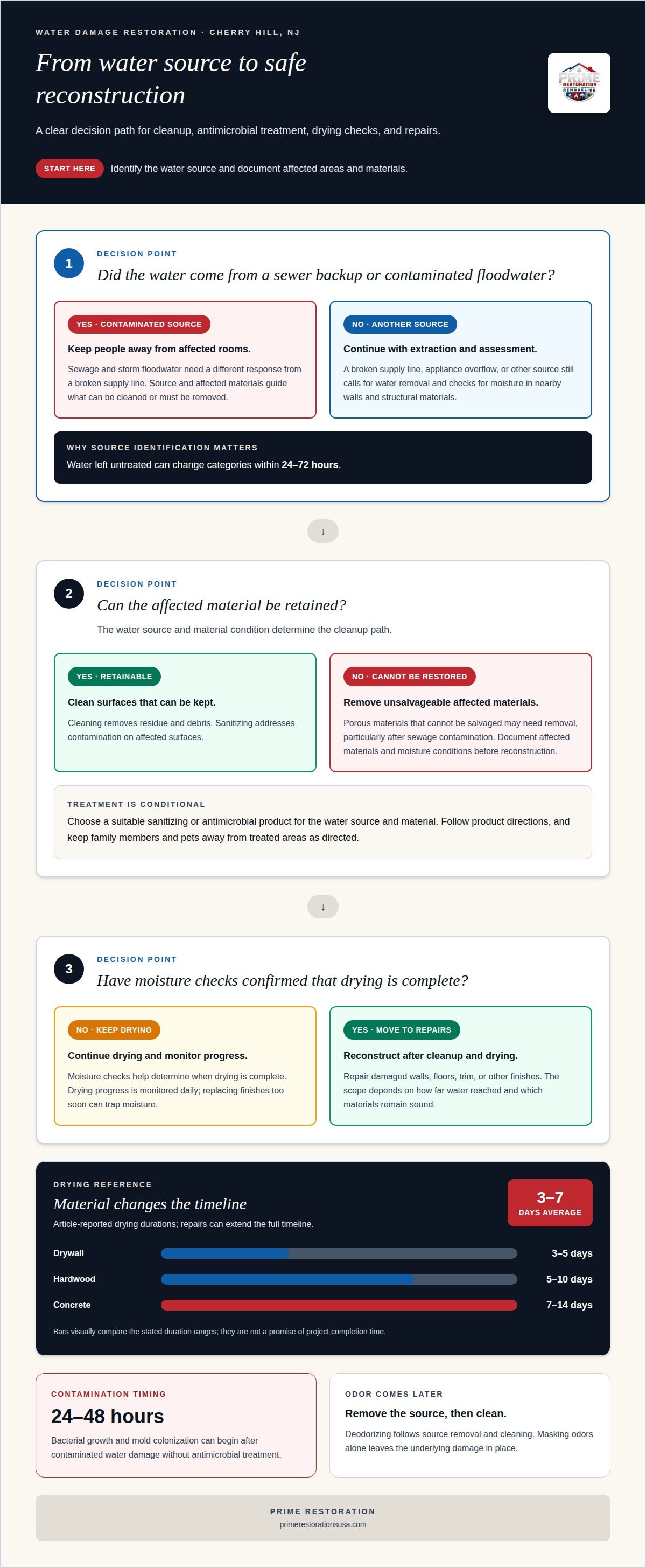
Emergency extraction removes standing water from rooms, floor coverings, and finished basements. Restoration teams use extraction equipment, then assess nearby walls and structural materials for moisture that may sit behind visible damage. A sewer backup or storm floodwater requires a different response from a broken supply line. Water left untreated can change categories within 24 to 72 hours, so source identification matters.
Around-the-Clock Damage Response
A prompt response matters when a pipe breaks overnight, an appliance overflows, or heavy rain pushes water indoors. If it’s safe, stop the water source and stay clear of standing water near electrical outlets or wiring. A restoration team can remove water and assess the affected area. Frozen pipes, sump pump failures, and sewage backups in Cherry Hill all call for prompt attention.
Choosing a Licensed and Insured Company
Choose a restoration company that can provide current proof of applicable licensing and insurance, including liability coverage. Ask for a written scope describing the affected rooms, planned extraction, drying checks, and repairs. It should explain how the team will address water behind walls and document visible damage. Photograph affected rooms and belongings before cleanup; those records may support an insurance claim.
Insurance Coverage and Restoration Timing
Does homeowners insurance cover water damage restoration in New Jersey? Coverage depends on the policy, the water source, and applicable exclusions, so review your policy and contact your insurer. How long does restoration take? Drying averages 3 to 7 days, with progress monitored daily; drywall may take 3 to 5 days, hardwood 5 to 10 days, and concrete 7 to 14 days. Repairs can extend the full timeline.
Cleaning, antimicrobial treatment, and reconstruction
Professional restoration typically moves from assessment and documentation to extraction, cleaning, drying, treatment, and repair. In Cherry Hill, storm runoff and sewage backups affect which materials need removal and how they should be cleaned.
Sewage and Contaminated-Water Cleanup
A sewer backup means the water is contaminated. Keep people away from affected rooms. Cleanup removes unsalvageable porous materials and cleans surfaces that can be retained. Suitable sanitizing or antimicrobial treatment depends on the water source and affected materials. Bacterial growth and mold colonization can begin within 24 to 48 hours after contaminated water damage without antimicrobial treatment. Document affected materials and moisture conditions before reconstruction begins.
Basement Flooding and Storm Cleanup
Basements can flood after heavy rain, river flooding, or a sump pump failure. Flood-zone designations, drainage, and property grading can help explain stormwater exposure, but runoff may still enter through low openings or overwhelm drainage. Cleanup involves separating damaged contents from building materials, removing standing water, and addressing wet floors and walls. Drying the structure before replacing finishes helps prevent moisture from being trapped during recovery.
Cleaning, Sanitizing, and Deodorizing
Cleaning removes residue and debris; sanitizing addresses contamination on affected surfaces. Antimicrobial products must suit the water source and material, and application should follow product directions. Keep family members and pets away from treated areas as directed. Deodorizing comes after the source is removed and the area is cleaned. Masking odors alone leaves the underlying damage in place. Moisture checks help determine whether drying is complete before repairs begin.
Residential and Commercial Cleanup
Homes and businesses need a clear sequence: assess and document damage, remove affected materials, clean, dry, treat, then rebuild. At home, that might mean restoring a flooded basement and replacing damaged trim. For a business, the team also considers affected work areas, equipment, and access routes. Reconstruction begins after cleanup and drying, with repairs tailored to the damaged walls, floors, and finishes.
Residential and commercial restoration services
When choosing a restoration company in Cherry Hill, look for a team that handles water removal, cleanup, and repairs, and can carry the work from initial extraction through reconstruction. Make sure the service covers Cherry Hill and Camden County.
Residential restoration may address a wet bedroom, damaged flooring, or a flooded basement. A coordinated repair plan identifies affected rooms, removes materials that cannot be restored, and schedules drying before installing new finishes. This treats the damaged area as part of the building, not just as a surface stain.
Commercial restoration plans should reflect the affected space and how it’s used. Water in an office, retail unit, or shared hallway can damage flooring, walls, equipment, and access routes. A restoration team can document each affected area, complete cleanup and drying, then coordinate repairs to return the space to usable condition.
Repairs follow mitigation and drying. They may include replacing damaged drywall, flooring, trim, or other finishes. The scope depends on how far the water reached and which materials remain sound. For example, a wet wall may need to be removed and replaced, while an unaffected adjoining room may need protection during construction.
Cherry Hill is in Camden County, and South Jersey service coverage extends across the wider region. Property owners in nearby communities should look for a restoration team that serves their area and can manage the work their building needs. A residential project may center on a finished basement; a commercial project may involve repairs in several interior areas.
For either property type, a clear sequence matters: document the damage, complete cleanup, verify drying, and then repair affected parts of the building. This keeps restoration organized from the first water extraction through the finished space.
Swipe to view the full infographic
Water damage restoration in Cherry Hill
A thorough response in a Cherry Hill home starts by identifying the source, affected rooms, and path the water took. Frozen pipes, sump pump failures, appliance overflows, heavy rain, and sewage backups can each cause different damage. Restoration covers cleanup, drying, sanitizing, and repairs; stopping the leak itself is a separate task.
Once the source is controlled, the team removes standing water and assesses materials beyond the visible wet area. Water can move through building materials within hours, including beneath flooring or behind walls. Moisture meters and thermal imaging can help locate hidden dampness, guiding decisions about what to dry, remove, or repair. This matters in Cherry Hill homes built before 1970, which may have greater moisture-intrusion risk.
Local conditions influence where water enters. Heavy rain and river flooding can affect low-lying areas, while a failed sump pump can flood a Camden County basement even when there’s no visible stormwater outside. A property’s flood-zone location and drainage affect its exposure, but indoor leaks also need prompt attention. Match cleanup to the water source and inspect the full affected area, not just the room with standing water.
After extraction, drying equipment and moisture checks help prevent dampness from remaining inside structural materials. The restoration team can document damage, remove materials that cannot be restored, and plan repairs once affected areas are dry. Drying needs vary: drywall typically takes 3 to 5 days, hardwood 5 to 10 days, and concrete 7 to 14 days. A Cherry Hill project may combine floor drying, wall repairs, and basement cleanup.
For water damage restoration in Cherry Hill, NJ, a complete response connects the cause, hidden moisture, cleanup, and repairs in one sequence. If water is near electrical outlets or wiring, turn off power to affected rooms only if you can do so safely. Photograph the damage before cleanup begins and keep those records as restoration progresses.
Prime Restoration: Water damage Restoration South Jersey
Prime Restoration handles water removal and flood cleanup for Cherry Hill homes and businesses, from initial extraction through restoration of affected areas. Turn to the team when water has spread beyond a single surface, a basement has flooded, or repairs are needed after cleanup.
For water damage restoration in Cherry Hill, NJ, Prime Restoration provides emergency water removal and restoration across Camden County and South Jersey. After a leak or flood, the team can address affected areas and help move your property toward recovery. Prime Restoration also handles fire and smoke damage.
Contact Prime Restoration to discuss the damage to your property and plan the next steps.
Plan the next step toward a usable property
Once immediate damage is under control, shape the recovery around how you use the property. A family may need bedrooms and a kitchen back in service; a business may need workable areas for staff or customers. Share these priorities early so the repair plan reflects daily needs as well as damaged materials.
For a Cherry Hill property, water damage restoration should start with a clear understanding of the work ahead. Focus on affected spaces, repair priorities, and decisions that can keep the project moving. Consider which finishes, fixtures, or equipment matter most to daily use, and include those details in the plan. Explain how the damage has changed your use of the home or business. A practical plan can make the return to normal use easier to manage.
For help deciding on your next step, Contact Prime Restoration today. You can move forward one clear decision at a time.
Frequently Asked Questions
What services do you offer to protect my home from moisture and structural damage?
Prime Restoration handles water removal, drying, flood cleanup, mold remediation, and reconstruction. After a washing machine leak, for example, restoration can address affected building materials and repair damaged areas. Water damage restoration in Cherry Hill, NJ can also involve repairs after a storm or fire. The appropriate work depends on the source and extent of the damage.
Who will actually be performing the labor on my property?
Prime Restoration’s team carries out the restoration work planned for your property. Depending on the damage, this may include water extraction, structural drying, cleanup, mold remediation, or reconstruction. A basement flood, for example, may require cleanup and drying before damaged finishes can be rebuilt. The work scope should clearly identify the tasks included in your restoration plan.
Why do Cherry Hill residents trust Prime Restoration?
Prime Restoration provides restoration services in Cherry Hill and nearby Marlton, Medford, Mount Laurel, Moorestown, and Voorhees. Services include water damage restoration, storm damage recovery, fire and smoke repairs, and reconstruction. These local services give property owners a practical next step after a leak or flood. The right restoration plan depends on the water source, affected materials, and repairs the property needs.
Do Cherry Hill water damage restoration companies offer 24/7 emergency service?
Some do; Prime Restoration provides 24/7 emergency water damage restoration and water removal. That around-the-clock availability can matter when a pipe breaks overnight or water enters a finished basement outside normal business hours. If water is near electrical equipment, stay clear and address safety first. Once the immediate hazard is controlled, restoration can address the water and resulting property damage.
How quickly should water damage restoration begin after a leak or flood?
Begin the restoration response as soon as it’s safe, because wet materials can deteriorate and moisture can spread beyond the visible area. Mold can begin developing on wet materials within 24 to 48 hours if they aren’t dried professionally. For example, a small leak beneath a sink may also affect cabinet panels or nearby flooring. Prompt assessment helps identify the full scope.
What are the risks of untreated water damage, including mold growth?
Water left untreated can become trapped in walls, floors, or cabinets, damaging materials and creating conditions that support mold growth. A visible stain may not show how far moisture has traveled. A musty odor, softened drywall, or warped flooring can point to a larger affected area. Sewage and stormwater also raise contamination concerns, so thorough cleanup is important before damaged rooms return to use.