Water damage restoration is more than removing visible water. The water damage restoration process assesses the source and spread of damage, removes water, dries and dehumidifies affected areas, cleans salvageable materials, and repairs damaged parts of the property. The type of water matters too: clean water, gray water with contaminants, and hazardous black water call for different restoration approaches.
A wet floor or wall can hide moisture deeper inside the structure, so a quick surface cleanup may leave damage behind. A thorough inspection helps identify affected materials, potential hazards, and what can be restored. Mold can begin growing in a water-damaged home within 24 to 48 hours, making prompt, properly monitored drying important.
This guide explains what restoration includes, how professionals inspect and classify water damage, and why drying and dehumidification come before final repairs. You’ll also learn how cleaning and reconstruction fit into the work, so you know what to expect as a property goes from wet and damaged to dry and restored.
Key Takeaways
- An inspection can reveal hidden moisture and help determine which materials may be restored.
- Water category and damage class describe different aspects of a loss, and both shape the restoration plan.
- Drying needs to reach affected materials before repairs begin, with moisture monitored along the way.
- Cleaning, disinfection, and removal of unsalvageable materials prepare the property for repairs.
What is Water Damage Restoration?
Water damage restoration removes water, identifies affected materials, and then cleans, dries, and repairs the property. The right approach depends on the water category, the severity of the damage, and how far moisture has spread.
Cleaning and Surface Sanitizing
Cleaning removes soil and residue, while disinfection targets harmful microorganisms on affected surfaces. After extraction with pumps or vacuums, professionals clean salvageable floors, furniture, and other contents, then disinfect surfaces when contamination calls for it. This step matters because visible signs of water don’t show everything left behind. For Category 3 water, all surfaces should be cleaned with an antimicrobial solution. Cleanup involving contaminated water or damage beyond a small, contained area calls for professional help. Restoration personnel should have training suited to their tasks, with any required licensing matching the work and location.
Water Category Identification
Water category identifies contamination, not how much of the building got wet. Category 1 is clean water; Category 2 is gray water with contaminants; Category 3 is hazardous black water that may contain sewage or dangerous chemicals. Initially clean water can become more contaminated over time, so the source and time since the leak affect the response. Category 3 calls for careful handling and antimicrobial cleaning. Keep people away from contaminated water and have the affected area assessed rather than treating every spill like a clean-water leak.
Mold Prevention and Cleanup
Mold prevention begins with removing water and drying wet materials, not simply wiping visible growth. Mold can start growing in a water-damaged home within 24 to 48 hours. Professionals assess damp materials, clean affected surfaces, and remove contaminated materials that cannot be salvaged after drying. If mold or a strong odor remains, further assessment may be needed. Cleanup protects more than appearance: hidden moisture in drywall or flooring can undermine surface cleaning and allow the problem to persist.
Cleanup Costs and Duration
Restoration time and cost depend on the damaged area, water category, materials, extraction, drying, cleaning, and repairs. Pricing depends on the case and is given after a quote request. Minor repairs may take a few days, while extensive damage can take several weeks. Drying alone often lasts 3 to 7 days, but the full restoration includes cleanup and any needed reconstruction. A professional assessment helps determine the work involved and whether the damage extends beyond what a simple household cleanup can address.
Drying and dehumidification
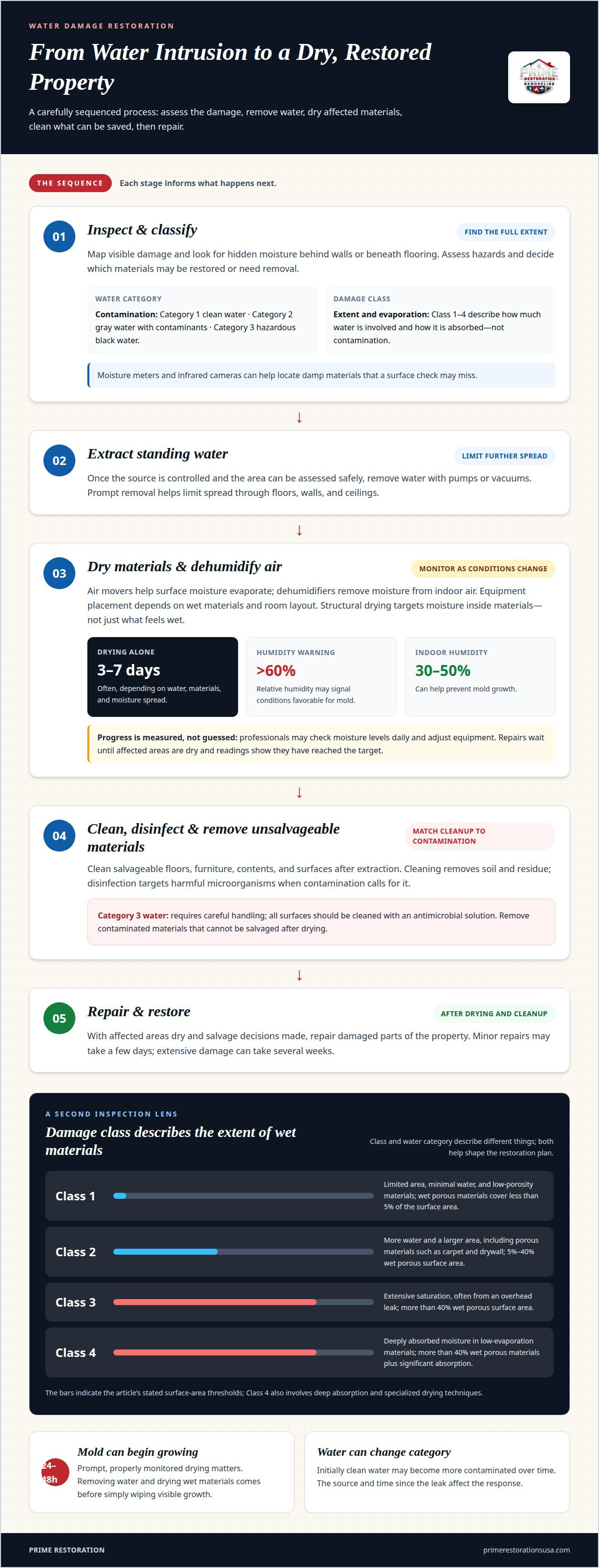
Drying removes moisture trapped in building materials, while dehumidification pulls excess moisture from indoor air. Both steps matter because damp framing, drywall, or flooring can remain a problem after standing water is gone. Repairs should wait until affected areas are dry and moisture readings show they have reached the target.
After water extraction, technicians position air movers and dehumidifiers to address both surfaces and the surrounding air. Fans circulate air to help surface moisture evaporate, while dehumidifiers collect moisture from the air. Equipment placement depends on the wet materials and room layout. A soaked wall may need airflow directed along its surface, while damp flooring may call for a different setup.
Structural drying targets moisture inside materials, not just what feels wet to the touch. Class 4 damage involves moisture deeply embedded in low-porosity materials and requires specialized drying techniques. This matters because a dry-looking surface can conceal moisture beneath it. Skipping that check can leave conditions favorable for mold growth or contribute to further structural damage.
Drying alone often lasts 3 to 7 days. The actual time depends on how much water entered, which materials absorbed it, and how deeply moisture spread. Dehumidifiers and fans keep working as conditions change, so a single initial reading isn’t enough to establish progress.
During restoration, professionals may visit daily to check moisture levels, inspect equipment performance, and adjust placement or operation. Relative humidity above 60% may signal conditions favorable for mold; indoor humidity between 30-50% can help prevent mold growth. Monitoring readings helps determine when drying is complete and cleanup can move toward final repairs. For wet materials that need more than surface cleanup, water damage restoration includes structural drying before reconstruction begins.
Swipe to view the full infographic
Water damage inspection and loss classification
Cleanup should begin promptly once the water source is controlled and the area can be assessed safely. Removing water quickly helps limit its spread through floors, walls, and ceilings, reducing the risk of further structural damage.
An initial inspection maps visible damage and looks for moisture beyond the obvious wet area. Professionals can use moisture meters and infrared cameras to locate damp materials behind walls or beneath flooring. They assess affected rooms, identify potential hazards, and determine which materials may be restored or need removal. These findings guide water removal, cleanup, and remediation.
Water category describes contamination; damage class describes the amount of water and expected evaporation rate. The IICRC identifies four classes. Class 1 affects a limited area with minimal water and low-porosity materials. Class 2 involves more water and a larger area, including porous materials such as carpet and drywall. Class 3 means extensive saturation, often from an overhead leak. Class 4 involves deeply absorbed moisture in low-evaporation materials, such as dense building components.
Class percentages help explain the scope: Class 1 involves wet porous materials covering less than 5% of the surface area; Class 2 covers 5% to 40%; Class 3 covers more than 40%. Class 4 also involves more than 40% wet porous materials, plus significant absorption by low-evaporation materials. These classes are not water categories, so an inspection considers both contamination and saturation.
During assessment, the inspector connects each reading to a specific material and location. For example, a meter reading at a baseboard can show whether moisture has spread from a wet floor into the wall. The inspection also determines whether contents can be cleaned and salvaged or whether materials need removal to expose damp areas. This record guides equipment placement and helps track progress during follow-up checks. A room-by-room assessment gives the restoration team a clear scope before final repairs begin.
Meaning of water damage restoration
Water damage restoration means returning a water-affected property to a clean, dry, usable condition. It goes beyond removing standing water: the work addresses the cause of the damage, how water moved through the building, and which materials can be saved. A burst supply line, an overflowing appliance, and storm flooding each create different damage, so the restoration plan must fit the event.
Think of restoration as a series of connected stages, not a single cleanup task. First, the source of water is controlled and standing water is extracted. Next, affected areas are dried, cleaned, and assessed to determine which materials can be restored. Contaminated or unsalvageable materials are removed; repairs then replace damaged finishes and restore the space. Each stage should connect to the next so repairs don’t cover up moisture or unresolved damage.
The goal is to recover the building and its contents where practical, while addressing hazards and damage that surface cleaning can’t fix. For example, floodwater may affect flooring, wall cavities, furniture, and stored belongings differently. Each item needs an appropriate decision: clean and keep, dry and repair, or remove and replace. FEMA estimates that one inch of floodwater can cause more than $25,000 in property damage, showing why even shallow water deserves a careful assessment.
Restoration also means checking the work before rebuilding closes affected areas. Moisture readings help establish whether materials are dry enough for repairs, while a final review can identify remaining damp spots, odors, or visible damage. The practical takeaway: extraction starts recovery, but assessment, drying, cleaning, and repairs complete it. If water has affected your property, request water damage restoration help to move from cleanup toward full recovery.
Prime Restoration
Prime Restoration helps property owners move from water damage assessment through cleanup and reconstruction. Turn to the team when water has spread beyond a small, contained area, affected building materials, or left moisture that basic cleanup can’t reach. Water damage restoration in South Jersey and Camden County covers the work needed to restore affected areas, with one team handling the process from emergency response through the rebuild. For properties also affected by fire or smoke, Fire & Smoke Damage Restoration can address those related losses. If water has damaged your property in Cherry Hill, Marlton, Medford, Mount Laurel, Moorestown, or Voorhees, contact Prime Restoration to discuss the restoration work you need.
Move from damage to a clear recovery plan
The next step is turning the inspection findings into a practical plan for the property. That means identifying which areas need repair, what work must happen before rooms return to use, and how the restoration stages fit together. A clear plan connects urgent cleanup to the decisions that follow, rather than treating each damaged area as a separate problem.
The water damage restoration process is easier to manage when the property’s condition and the work still needed are clearly understood. If water damage has disrupted your home in Cherry Hill, Marlton, Medford, Mount Laurel, Moorestown, or Voorhees, Prime Restoration can help you plan the next steps for restoration in South Jersey and Camden County.
Discuss your water damage with Prime Restoration. A clear next step can help you move forward with greater confidence.
Frequently Asked Questions
What are the steps in the water damage restoration process?
The water damage restoration process moves from controlling the water source to restoring affected rooms. Professionals assess the damage, remove standing water, dry building materials, clean salvageable contents, and complete necessary repairs. For example, a leaking appliance may require water removal around the floor, drying beneath nearby cabinets, and replacement of damaged flooring. Each step addresses a different part of the loss, so repairs should follow drying and cleanup.
How do professionals assess water damage and classify water contamination?
Professionals assess where water traveled, which materials absorbed it, and whether contamination creates added hazards. They may use moisture meters or infrared cameras to find damp areas behind walls or under floors. Water categories describe contamination, while damage classes describe the amount of water and expected evaporation. Together, these findings help determine what can be dried and cleaned and what needs removal.
What equipment is used to dry and restore a water-damaged home?
Restoration crews use extraction pumps or high-capacity wet vacuums to remove standing water, then air movers and dehumidifiers to support drying. Moisture meters track readings in materials, while infrared cameras can help locate hidden damp areas. Equipment choice and placement depend on the affected materials and room layout. A wet wall cavity, for example, needs a different drying setup than an exposed tile floor.
Does homeowners insurance cover water damage restoration, and what exclusions apply?
Many homeowners policies cover water damage restoration, but coverage and exclusions vary by policy. The policy wording and cause of damage determine what’s covered; no single exclusion list applies to every home. A sudden plumbing leak and water entering from outside may be treated differently under specific policy terms. Keep records of the damage and restoration work to support claim documentation.
How do you prevent mold after water damage?
Prevent mold by removing water promptly and drying affected materials, including hidden spaces such as cabinet bases and wall cavities. Keep dehumidifiers running as directed and monitor moisture readings rather than relying only on touch. After drying, watch for persistent damp spots, visible growth, or unusual odors. These signs can indicate that moisture remains and the area needs further inspection and cleanup.
How much does water damage restoration cost in the United States?
A professional assessment can determine the work involved.