Sudden and accidental water damage from a burst pipe is generally covered by a homeowners policy in Marlton, while outside flooding is typically excluded; prompt burst pipe water damage cleanup in Marlton can help limit how far water spreads through floors, walls, and belongings. You’re right to focus on both coverage and drying: a pipe break can leave moisture beneath flooring and inside wall cavities, so visible puddles don’t show the full extent of the damage. This guide explains what shapes the cleanup work, how emergency water extraction and structural drying remove moisture, what documentation can support an insurance claim, and why a burst pipe differs from outside flooding; you’ll also see how damage assessment and drying lead into repairs, giving you a clearer picture of the steps ahead.
Key Takeaways
- Learn how water damage restoration moves from damage assessment and water removal to drying and, when needed, reconstruction.
- The U.S. Environmental Protection Agency says mold can begin growing in damp areas within 24 to 48 hours, so prompt drying matters.
- Know what to do when a pipe bursts, including how to limit contact with standing water and protect affected surfaces.
- Understand how sudden pipe damage differs from other water losses when reviewing possible homeowners policy coverage.
Water Damage Restoration Process in Marlton
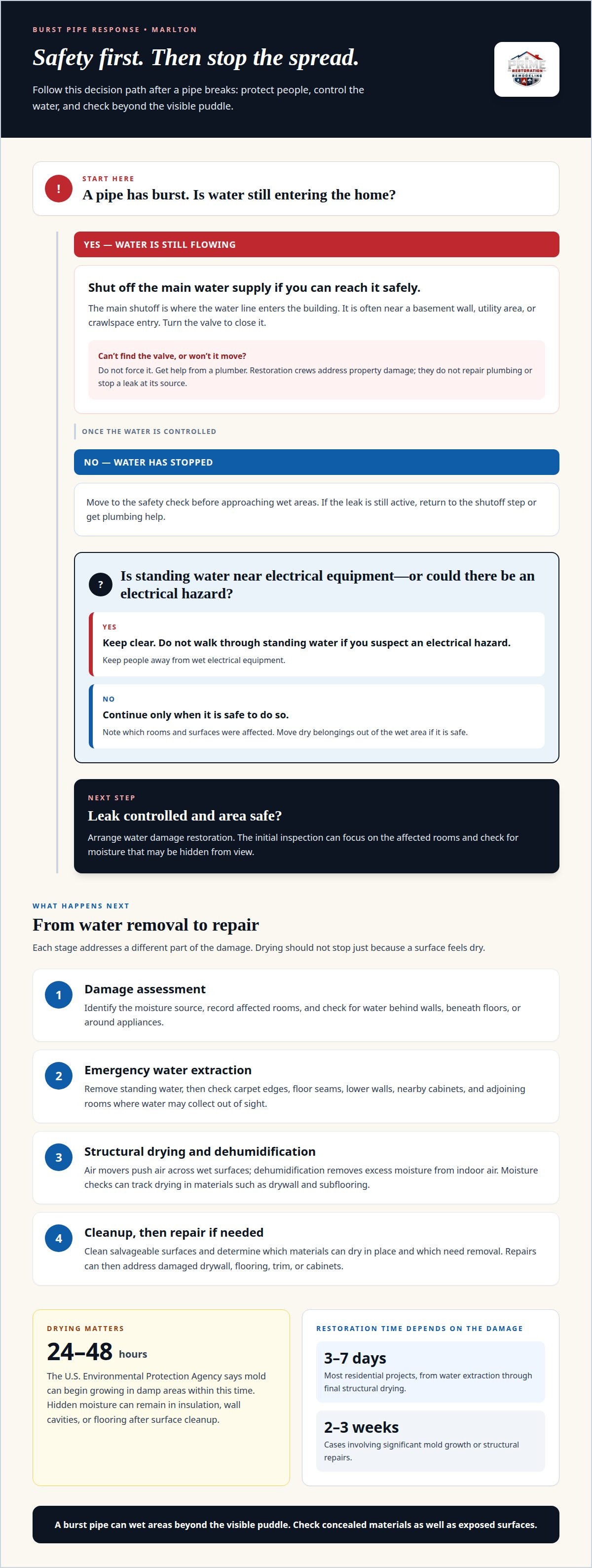
In Marlton, water damage restoration starts with assessing the damage. The restoration team identifies the moisture source, records affected rooms, and checks for water behind walls, beneath floors, or around appliances. That inspection guides water extraction, removal of materials when needed, cleanup, and structural drying. Each step addresses a different part of the damage, so drying should not stop just because a surface feels dry.
Timelines depend on how far water traveled and which building materials absorbed it. Most residential water damage restoration projects in Marlton take three to seven days from water extraction through final structural drying. Cases involving significant mold growth or structural repairs can take two to three weeks. A damaged basement with wet flooring and wall cavities may need more work than a contained leak around one appliance.
Ask the restoration team to explain the plan in clear steps. Useful questions include:
- Which rooms and materials show visible or hidden moisture?
- How will you track drying progress in the walls and floors?
- What work must happen before repairs or rebuilding can begin?
Clear answers connect restoration with reconstruction. The crew first removes water and dries affected structures; then repairs can address damaged drywall, flooring, trim, or cabinets. If wet materials must come out, controlled demolition creates a clean path for rebuilding. Ask how the damage assessment shapes the work plan and which areas may need repair after drying. This sequence explains why restoration is not complete until wet building materials are dry and damaged finishes are ready for reconstruction.
Water Extraction and Structural Drying
Extraction removes standing water, but drying must reach soaked materials below visible surfaces. Water that looks clear may be unsafe after contact with contaminants, so avoid handling it when its source is uncertain.
Water Extraction
Emergency water extraction starts by removing standing water with pumps or wet vacuums suited to the affected area. Technicians check carpet edges, floor seams, and lower wall sections, where water can collect out of sight. After a burst appliance line, they inspect nearby cabinets and adjoining rooms, not just the visible puddle.
Structural Drying and Dehumidification
After extraction, air movers push air across wet surfaces, while dehumidification removes excess moisture from indoor air. Technicians track moisture in materials such as drywall and subflooring, then adjust equipment placement as drying progresses. Look for a process that checks concealed areas and records readings, rather than relying on touch or room temperature.
Drying and Cleanup
Once standing water is removed, cleanup addresses residue on affected floors, trim, and other salvageable surfaces. The team separates materials that can dry in place from those that need removal, then keeps airflow clear around wet areas. Ask which spaces were cleaned, what moisture checks are ongoing, and which materials remain under observation.
Mold Risk from Incomplete Drying
The U.S. Environmental Protection Agency says mold can begin growing in damp areas within 24 to 48 hours. Hidden moisture in insulation, wall cavities, or flooring can maintain damp conditions after surface cleanup. Drying checks should include concealed materials, not only exposed flooring. Document any musty odor or visible growth during the damage assessment.
Emergency Response Availability
A burst pipe can keep flooding a Marlton home until the water supply is shut off. Emergency response focuses on limiting further damage, inspecting affected areas, and starting water extraction.
Emergency Burst-Pipe Response
For 24/7 emergency water damage restoration in Marlton, the restoration team serving this page responds to water losses, inspects affected rooms, and begins water extraction. Restoration crews address the resulting property damage; they do not repair plumbing or stop a leak at its source. If a pipe is still leaking, shutting off the water and arranging plumbing repair are separate steps.
Give the restoration team clear details: where water appeared, which rooms are affected, and whether water reached a basement or finished floors. This helps direct the initial inspection toward wet areas and possible hidden moisture.
Main Water Supply Shutoff
To stop water entering the home, locate the main shutoff valve where the water line enters the building. It is often near a basement wall, utility area, or crawlspace entry. Turn the valve to close it. If it will not move or you cannot find it, do not force it; get help from a plumber.
Keep clear of standing water near electrical equipment. Once the leak is controlled, note which rooms were affected and arrange water damage restoration.
To reduce the risk of pipes freezing in winter, insulate exposed pipes in unheated areas such as basements and crawlspaces. Keep indoor heat steady during cold weather, and open cabinet doors where plumbing sits against cold exterior walls. If you leave home, maintain heat rather than letting rooms become cold. These steps help protect pipes, but cannot prevent every failure.
Swipe to view the full infographic
Burst Pipe Water Damage
A burst pipe can send water beyond the room where it breaks. A supply line behind a kitchen cabinet may soak the floor, seep beneath adjoining rooms, and drip into a finished basement. Washing machine overflows can also flood a basement quickly, leaving standing water against drywall, stored belongings, and floor coverings.
Start with safety and the source. Shut off the main water supply if you can reach the valve safely, then keep people away from wet electrical equipment. Do not walk through standing water if you suspect an electrical hazard. Once the leak stops, note which rooms and surfaces were affected, and move dry belongings out of the wet area when it is safe.
Water can damage materials beyond what is visible on the surface. Flooring may conceal wet underlayment; water can also enter wall cavities, baseboards, insulation, and the subfloor. Swelling, buckling, peeling paint, or a soft spot underfoot can point to trapped moisture. A dry-looking room does not rule out damage behind a wall or beneath a finished floor.
- Identify the rooms where water first appeared and where it traveled.
- Keep photos of visible damage and affected belongings for your records.
- Arrange water extraction and inspection of concealed wet materials.
During burst pipe water damage cleanup in Marlton, the key is addressing both standing water and the moisture it leaves behind. Removing water without checking soaked building materials can leave the structural problem unresolved. If water has spread across floors or into a basement, request burst pipe water damage cleanup to address the affected areas and plan the next restoration steps.
Prime Restoration
Prime Restoration provides burst pipe water damage cleanup in Marlton, helping local property owners recover quickly. Contact the team when water has reached finished floors, a basement, or wall cavities, or when materials remain damp after the leak is stopped. Prime Restoration handles water removal and restoration, not plumbing repairs.
The work starts with an assessment to identify affected areas and plan the response. Prime Restoration handles emergency water removal, structural drying, and cleanup to prepare damaged spaces for repair. If water has soaked building materials or affected several rooms, an assessment helps define what needs drying, removal, or rebuilding.
Restoration may lead into reconstruction when damaged finishes cannot be restored in place. Prime Restoration’s same team handles water damage restoration and reconstruction, connecting mitigation with rebuilding so you do not have to coordinate separate phases. The work can include:
- Removing standing water and drying affected structures.
- Documenting property damage to support your insurance claim.
- Repairing and rebuilding damaged areas after mitigation.
Insurance coverage depends on your homeowners policy and the cause of the loss. Prime Restoration can provide insurance-claim documentation, while your insurer and insurance adjuster handle coverage decisions. Contact the team when a burst pipe has left standing water, hidden moisture, or damaged surfaces, especially if you need help understanding the restoration steps and the work ahead. Share which rooms are affected and whether water remains; those details help frame the initial response.
Contact Prime Restoration to discuss water damage at your Marlton property.
Take the Next Step Toward a Dry, Stable Home
Getting your home back means more than addressing damaged materials. It means moving toward rooms you can use again and a living space that feels settled. After a pipe break, take recovery one decision at a time rather than trying to solve every disruption at once.
For burst pipe water damage cleanup in Marlton, Prime Restoration brings more than 20 years of restoration experience to property recovery in South Jersey. The team’s work focuses on helping homeowners move forward after water damage, with attention to the practical needs of the home and the people who live there.
You can start a conversation when you’re ready to discuss your property and what comes next. Contact Prime Restoration for help. A clear first step can make the road back to normal feel more manageable.
Frequently Asked Questions
Does a Homeowners policy Cover Water Damage?
A homeowners policy may treat a sudden pipe break differently from a slow leak. Gradual leaks and damage linked to neglect or poor maintenance are generally less likely to be covered, while policy wording and the documented cause matter. If an appliance connection fails unexpectedly, note when you discovered the damage and preserve records that help distinguish a sudden event from a long-term leak.
What should I do immediately after a pipe bursts and floods my home?
Once the area is safe and the leak is controlled, make a room-by-room record of what was affected. Photograph damaged belongings in place, keep any purchase or repair records you already have, and note when you first noticed the water. These details can help you describe the loss accurately to your insurer and restoration team without relying on memory.
What determines the scope of burst-pipe water damage cleanup in Marlton, NJ?
The cleanup scope depends on how much water escaped, which rooms it reached, and whether it affected finished surfaces or concealed building materials. A leak confined to a cabinet differs from water that travels beneath flooring or into a basement. The assessment identifies materials that can be dried and retained and those that need removal before repairs.
How quickly should water extraction and drying begin after a burst pipe?
Arrange a restoration assessment as soon as the plumbing leak is controlled and the space is safe to enter. Do not wait for stains or warped flooring to appear; water can reach concealed areas before surface changes show. Prompt attention helps identify where moisture traveled and lets the restoration team prioritize affected rooms and belongings.
What are the steps for professional water damage cleanup and structural drying?
Professional cleanup accounts for belongings and finishes, not just the building structure. The restoration team assesses movable contents and affected surfaces, then identifies what can be retained and what needs removal. That distinction shapes the work plan and helps avoid treating every wet item or material the same way. Repair planning follows when affected areas are ready for the next phase.
How long does burst-pipe water damage restoration usually take?
The schedule depends on drying results and the repairs the damage requires. A leak affecting a small, accessible area differs from water trapped beneath finished flooring or inside wall cavities. If damaged finishes need replacement, reconstruction follows mitigation. The restoration team can explain the sequence as the condition of affected materials becomes clear.